In this guide
What a back and neck session involves
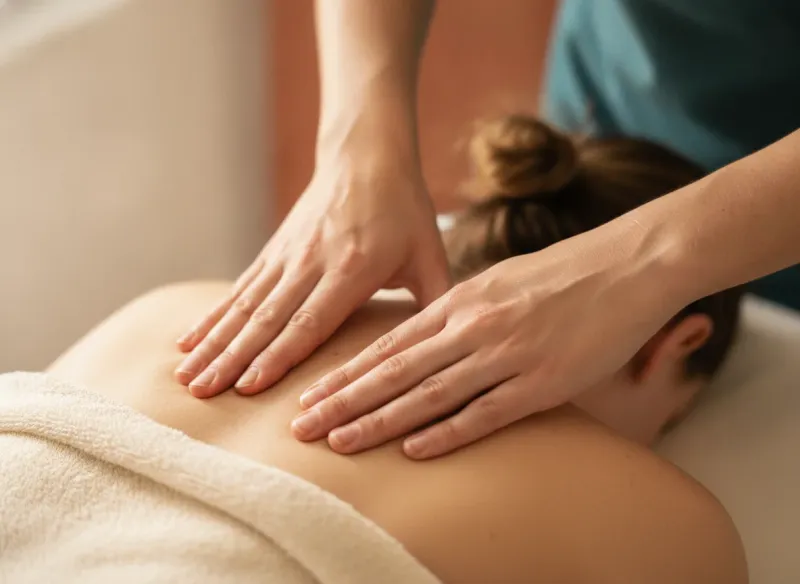
The therapist works on the upper body only, your back and neck. Session length: 20 to 120 minutes, depending on the studio.
If the session uses oil, you take off your top. If it's done in the traditional Thai style, you stay dressed. Ask when you book if it matters to you.



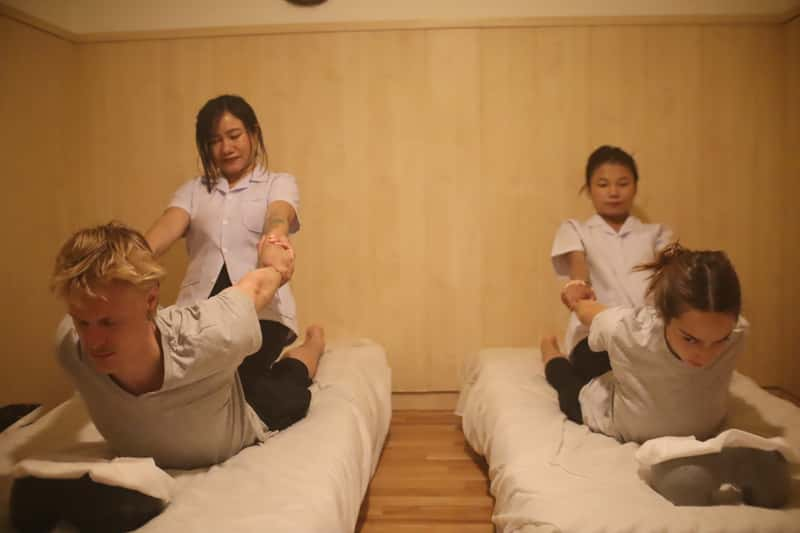
Lunala Thai Massage also has 20, 75, 90 and 120-minute sessions.
Does massage help back or neck pain?
It can bring some relief for a while, but the evidence is limited and mostly short term.
Lower back. A 2015 Cochrane review found that massage improved pain only in the short term, and rated the evidence as low or very low certainty. Compared with no treatment or a sham, massage did better in the short term but not in the long term. There were no serious side effects in the trials, only minor ones. NICE, the UK guideline body, only supports manual therapy, which includes massage, as part of a treatment package that includes exercise, not on its own.
Neck. A 2024 Cochrane review concluded that “the contribution of massage to the management of neck pain remains uncertain”. Compared with a dummy massage, there was little to no difference in pain. The authors call for larger, better-designed trials. The NCCIH says massage may help neck or shoulder pain, but the benefit may only last a short time.
So if you come out of a massage feeling better, that's a fine reason to book another. Don't expect it to fix pain that has gone on for weeks.
When to see a doctor or physio instead
The NHS treats these as emergencies (go to A&E or call emergency services) if you have back pain with pain, tingling, weakness or numbness in both legs, loss of feeling around your genitals or bottom, changes in your bladder or bowels, chest pain, or if it started after a serious accident. In Spain, as everywhere in the EU, the emergency number is 112, and the call is free.
Ask for an urgent appointment if you feel hot, cold, shivery or generally unwell, or if the pain is severe, came on suddenly or is getting worse quickly.
See a doctor if back pain hasn't improved after a few weeks of looking after it at home, if it stops you doing everyday things, or if it's worse at night or coming from between your shoulders rather than your lower back.
For neck pain, the NHS says to see a GP if it hasn't gone after a few weeks, painkillers haven't worked, or you have other symptoms such as pins and needles or a cold arm. A doctor can refer you to physiotherapy for exercises.
What to tell your therapist
- Where it hurts and how long it has been going on.
- If you want them to focus on one area, say so when you book or at the start.
- If you take blood thinners or have had blood clots. Healthline advises talking to your doctor first in those cases before a deep tissue massage.
- If the pressure is too much, say so straight away. You don't have to put up with it.
At your desk
The NHS suggests sitting upright and not holding your neck in one position for long periods, for example at a desk. It also says it's better to keep your neck moving.