Every empty slot on your schedule is annoying, but it’s worth pausing before you reach for the strictest possible fix. A cancellation fee or a rigid deposit policy might protect that one appointment — and it can also be the reason a client who genuinely liked your work never books with you again. The goal isn’t to punish people for being human. It’s to make it easier for them to do the right thing, and to reserve firmer measures for the cases that actually need them.
Here’s a practical order of operations, from lowest-friction to firmest.
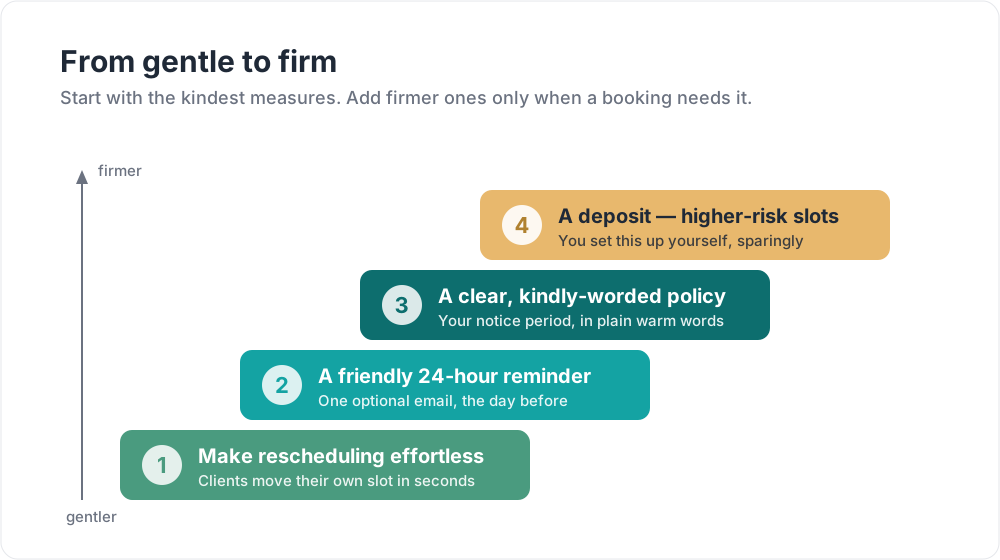 Work up the ladder only as far as a booking actually needs — start with the kindest measures.
Start by removing the friction, not adding it
Think about why people actually no-show. Rarely is it “I decided not to care.” More often it’s: something came up, they meant to call, the shop was closed when they remembered, or reaching out felt like an awkward conversation they kept putting off. Every one of those is a friction problem, not a discipline problem.
The simplest fix is making it effortless to change plans instead of abandoning them. If a client can open a link and move their own appointment to a different day in ten seconds, a lot of them will — instead of just not showing up. This is one of the more overlooked benefits of online self-booking: it’s not only a convenience for finding a first appointment, it’s also the easiest off-ramp when plans change. A client who can reschedule themselves at 11pm on a Tuesday, without calling anyone or explaining anything, is a client who doesn’t quietly vanish from your calendar.
WellDesk’s public booking page lets clients do exactly this — book, and later reschedule, without needing to call or message you. It’s a small thing, but it directly targets the most common, least malicious reason appointments get missed.
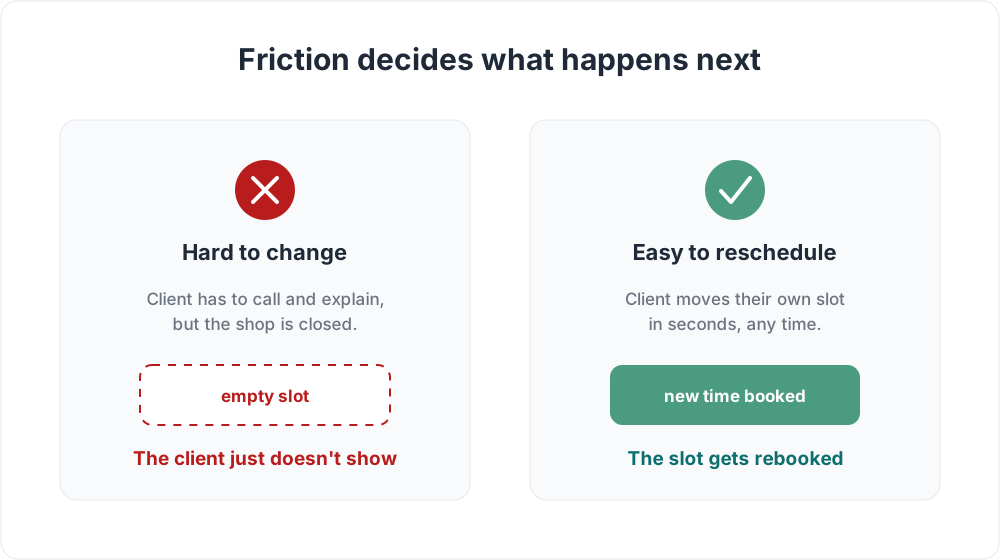 The difference between an empty slot and a rebooked one is often just how easy it is to change plans.
A friendly reminder catches honest forgetting
Beyond friction, some no-shows are just forgetting. People book something three weeks out and life simply moves past it. A reminder close to the appointment catches this group without needing to be aggressive about it.
WellDesk offers one optional reminder: a single email sent about 24 hours before the appointment, which you can turn on for your shop or leave off. That’s it — it’s email only, sent once, and it’s off by default. It’s not a marketing touchpoint or a multi-stage campaign, just a quiet nudge at the point where it’s most useful: close enough to the appointment to be relevant, early enough that the client can still reschedule if something’s come up.
Say your policy out loud, kindly
A cancellation policy only works if people know it exists before they need it — not as a surprise the first time they cancel late. Keep it short, plain, and warm rather than legalistic: how much notice you need, and what happens if that notice doesn’t happen. Put it somewhere clients will actually see it at booking time, not buried in a page nobody opens.
The tone matters as much as the content. “We ask for 24 hours’ notice so we can offer the slot to someone else — thank you for understanding” reads very differently from a wall of bold, red text about fees. Same policy, very different relationship with the person reading it.
Deposits, used sparingly
For situations where the risk is genuinely higher — a longer or higher-value service, a group booking, or a client who’s already no-shown once — a deposit is a reasonable, well-established tool. It’s worth being clear that this is something you set up and manage on your own (through your payment processor or however you currently take payments), not something that happens automatically as part of booking with WellDesk today.
The trap to avoid is applying it everywhere by default. A deposit on every single booking adds friction to every single client, including the vast majority who were always going to show up. Save it for the cases where the trade-off is worth it, and be transparent that it’s refundable or applied to the service when the appointment happens.
Treat the data as information, not a scoreboard
If you keep client records — WellDesk lets you attach notes to a client’s profile — you’ll naturally start to notice patterns: someone who’s missed two appointments in a row, a particular day of the week that seems to slip more often. That’s useful, but only if you use it to have a real conversation rather than to quietly build a case against someone.
A short, non-judgmental check-in — “Hey, noticed you’ve had to miss the last couple of appointments, is everything okay, want to find a time that works better?” — often resolves the pattern outright. Sometimes it’s a scheduling mismatch you can actually fix. Sometimes it tells you the relationship has run its course. Either way, you learn more from asking than from silently penalizing.
Start with warmth, escalate only when you need to
None of this requires new software or a policy overhaul overnight. Start with the cheapest, kindest interventions — easy rescheduling and a gentle reminder — and only add firmer measures like deposits for the specific situations that call for them. Most clients who no-show aren’t trying to waste your time; treat them that way first, and save the stricter tools for the smaller number of cases that actually need them.
WellDesk is free to use during our public beta — self-booking, rescheduling, the optional 24-hour reminder, and client notes are all included, no plans or charges yet. If you want to see how it fits your shop, it takes a few minutes to set up.