

If most of your new clients still come from walk-ins and Instagram, you’re leaving a lot of business on the table. Every day, people in your neighbourhood search Google for “Thai massage near me” or “nail salon [your area]” — and if your shop doesn’t show up, they book with whoever does.
The good news: getting found on Google isn’t complicated or expensive. It’s mostly about doing a handful of things properly, consistently. Here’s what actually moves the needle for a small wellness shop.
1. Claim and completely fill out your Google Business Profile
This is free, and it’s the single highest-leverage thing you can do. If you haven’t claimed your listing yet, search your shop name on Google — if a box appears on the right with a “claim this business” option, start there.
Once you’re in, don’t just fill in the minimum. Add:
- The correct business category (be specific — “massage therapist” or “nail salon,” not just “spa”)
- Your real hours, including holiday exceptions
- Your phone number and address, exactly as they appear elsewhere
- A handful of real photos of your space, not stock images
- A short, plain-language description of what you do and where
An incomplete profile signals to Google that your business is less active or less trustworthy — and it gives searchers less reason to pick you.
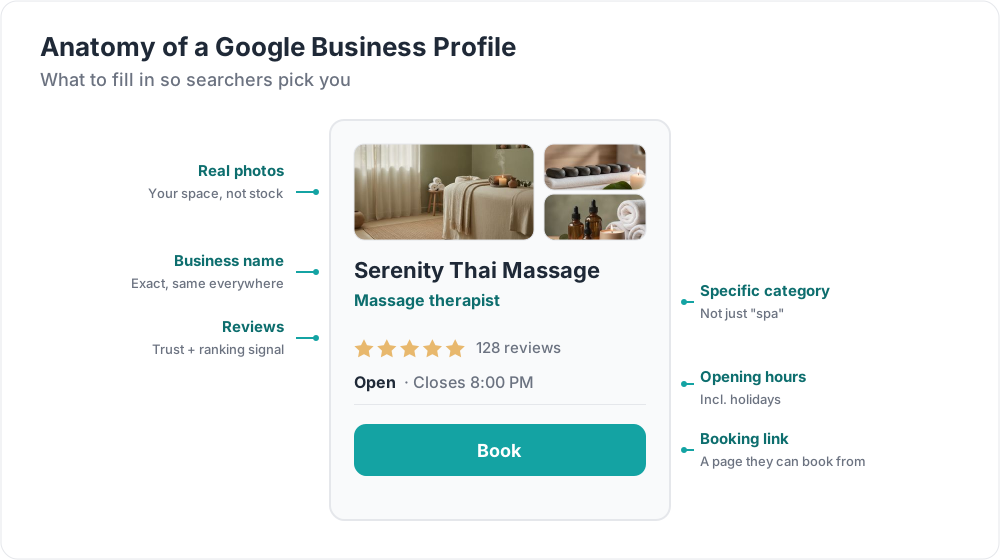 Every section you fill in gives searchers — and Google — another reason to pick you.
2. Have an actual page people can book from — not just a bio link
A Google listing gets people to notice you. What happens next matters just as much. If tapping your listing leads to a static Instagram bio with a DM button, you’re asking people to do extra work — message you, wait for a reply, go back and forth on times. Many won’t bother.
What works better is a real page: one that shows your services, lets someone pick a time, and confirms the booking on the spot, day or night. It’s also worth knowing that this kind of page — a proper, structured web page with your services and location on it — is exactly the kind of content Google can index and rank for local searches, in a way a social bio simply isn’t built for.
This is one of the reasons every WellDesk shop gets its own public booking page at <shop-name>.welldesk.ai. It’s built to do double duty: clients can book directly from it any time, and because it’s a real, indexable page tied to your shop’s name and services, it’s also something Google can surface in local results. In our experience, a page like this can start ranking for local searches within a couple of weeks of going live — not guaranteed, but a realistic starting point if the rest of your basics (profile, reviews, consistency) are also in place.
3. Get reviews, and respond to them
Reviews do two things: they build trust with people scanning search results, and they’re a signal Google factors into local rankings. You don’t need dozens overnight. You need a habit.
After a good appointment, simply ask: “If you have a minute, a Google review would really help us.” Most happy clients are glad to. Send the direct link by text or hand them a card with a QR code at checkout — the easier you make it, the more you’ll get.
When reviews come in, reply to them, good or bad. A short, genuine thank-you on a positive review and a calm, professional response to a critical one both show future clients — and Google — that someone’s actually paying attention.
4. Keep your name, address, and phone number consistent everywhere
This one’s easy to overlook. If your shop is listed as “Luna Spa” on Google but “Luna Wellness Studio” on Instagram, or your old address still shows up somewhere, it creates confusion for clients and mixed signals for Google about which listing is authoritative. Do a quick check across Google, Instagram, Facebook, and anywhere else you’re listed, and make sure the basics match exactly.
5. Use the words your clients actually search
Industry language doesn’t always match how people search. Nobody types “holistic bodywork” — they type “deep tissue massage near me” or “gel nails downtown.” Look at your own service names and ask: would a first-time client actually type this? Weave the plain version — service plus location — into your Google description, your page’s service names, and your posts.
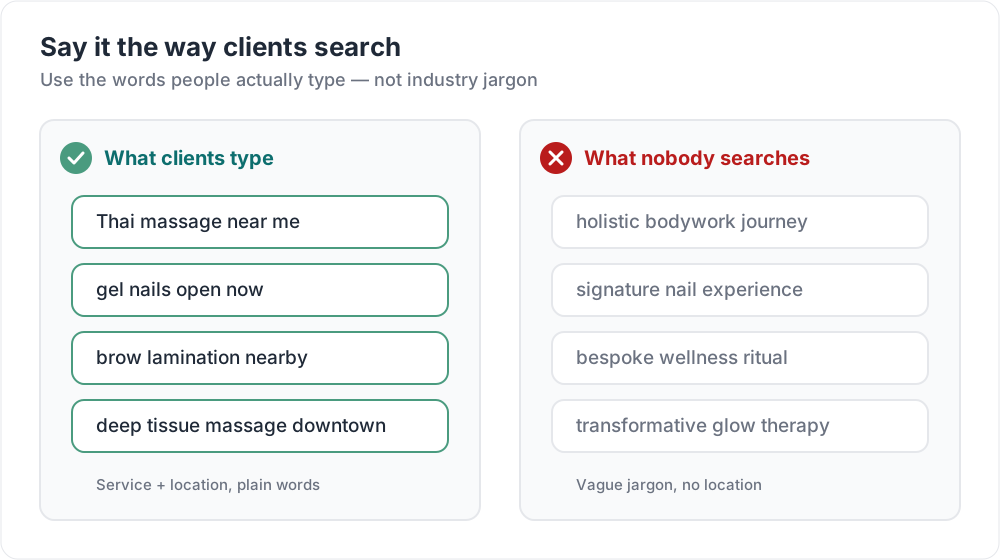 Write your services the way a first-time client would search for them.
Start with what’s free
None of this requires a marketing budget. A complete Google Business Profile and a steady trickle of reviews cost nothing but a bit of consistency. If you want a bookable page that’s built to be indexable from day one, WellDesk is free to use during our public beta — no plans, no charge, just a real booking page under your shop’s name. Set one up and see how it looks alongside your Google listing.